
Nassau County, from the North Shore to the South Shore
Mold Remediation in Nassau County, NY, Built on the Assessor's Plan
Have the growth taken out by a licensed remediation firm working to the independent assessor's written plan, with the water that fed it repaired first.
Mold Remediation quote
Tell us which rooms the plan covers, what the floors and walls are made of, and whether the water source has been repaired. No plan yet? Say so, and we will start with the assessment.
Would you rather talk it through? Call (315) 640-3590.
$100 off your first job
Credited by us on your first booked job.
- One credit per customer per property, on your first booked job.
- Valid through December 31, 2026.
Mention this offer when you book. Full terms.
What a Nassau mold remediation removes, and what has to be fixed first
Remediation is the physical job: sealing off the work area, taking out material that cannot be saved, cleaning what can stay, and leaving the space ready for an independent check. In New York the remediation firm works to the scope an independent assessor wrote, and it may not write its own. That works in your favor, because every firm you invite prices the same plan, and the plan says what the water source was. The source is dealt with before the cleanup. The state health department puts finding and correcting the moisture problem first, then throwing out porous material with heavy growth, such as drywall, carpet and ceiling tiles. A third of Nassau's homes were built in the 1950s alone, and whole towns such as Levittown went up on slabs with no basement, so the material that comes out is often flooring, underlayment and the bottom of the walls.
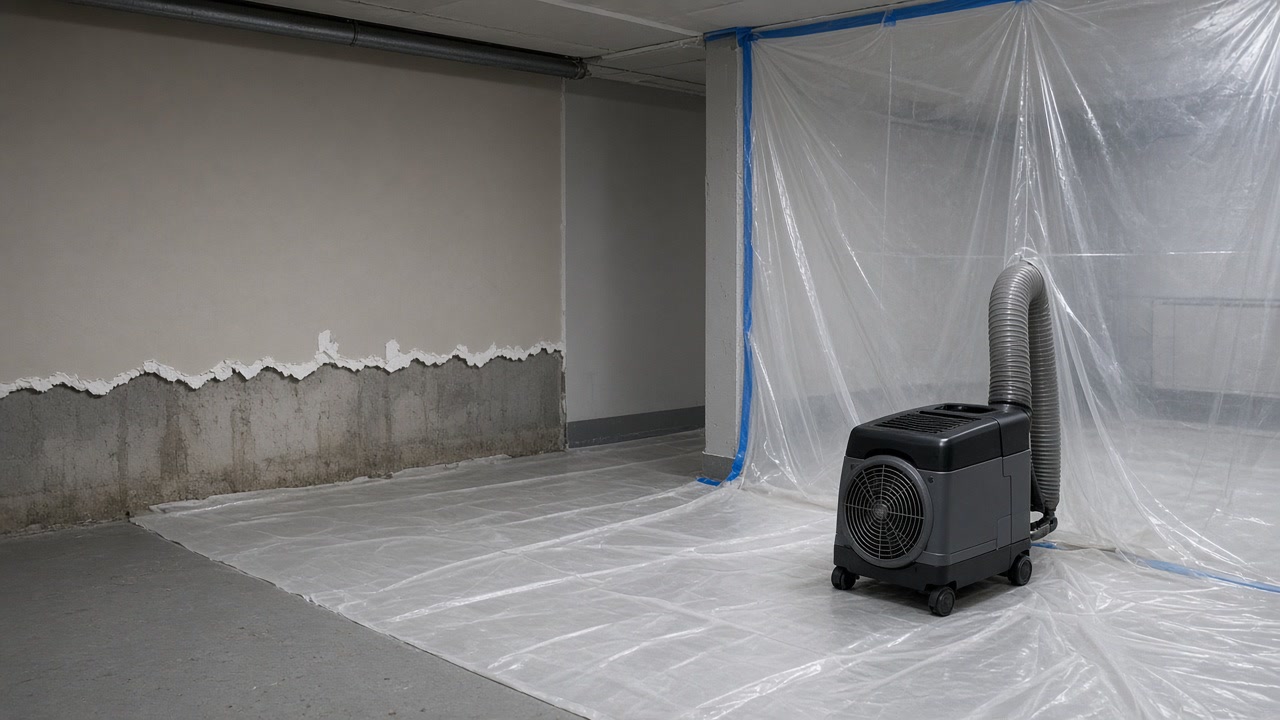
- Containment and negative air pressure set to the plan, so work in one room does not carry spores into the rest of the house
- Removal and bagging of the porous materials the plan lists, such as drywall, carpet and pad, ceiling tile and insulation
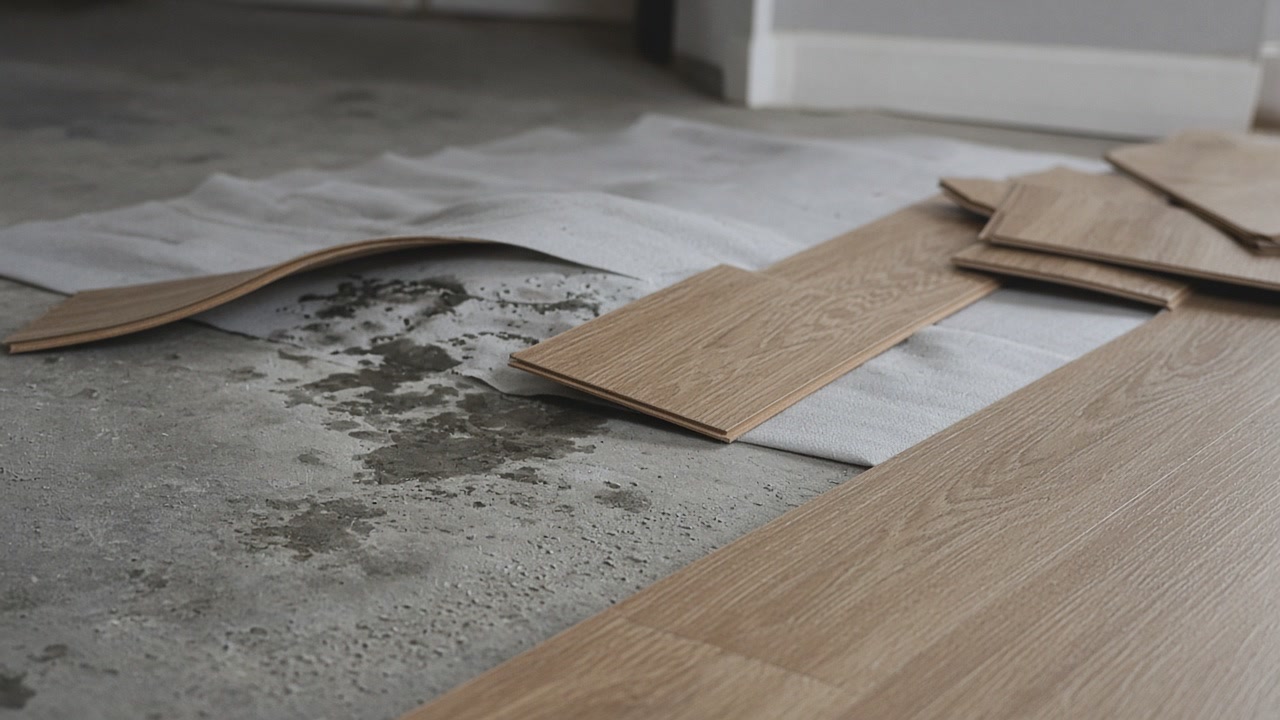
- Lifting vinyl, laminate or carpet laid over a slab where growth has formed on the underside or in the underlayment
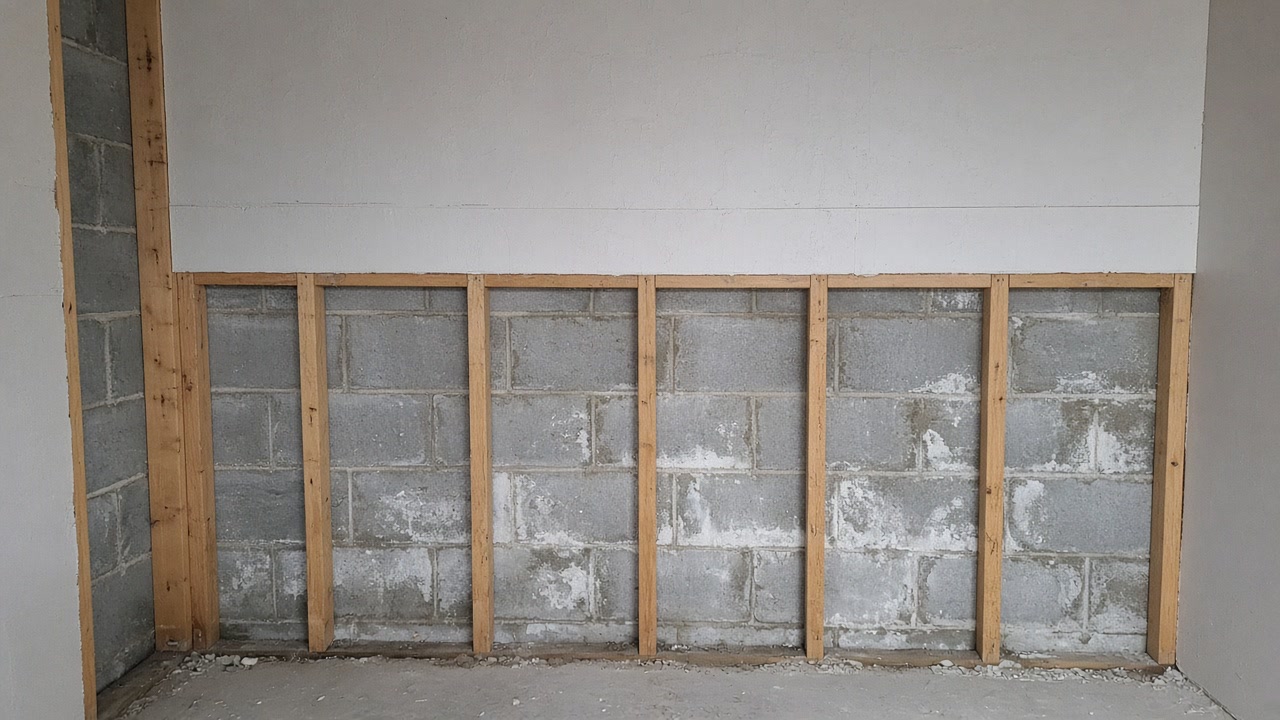
- Finished basement strip out: baseboard, the lower cut of drywall, bottom plates and insulation, as far as the plan says the damp went
- HEPA vacuuming and cleaning of framing, joists, block and concrete that can stay in place
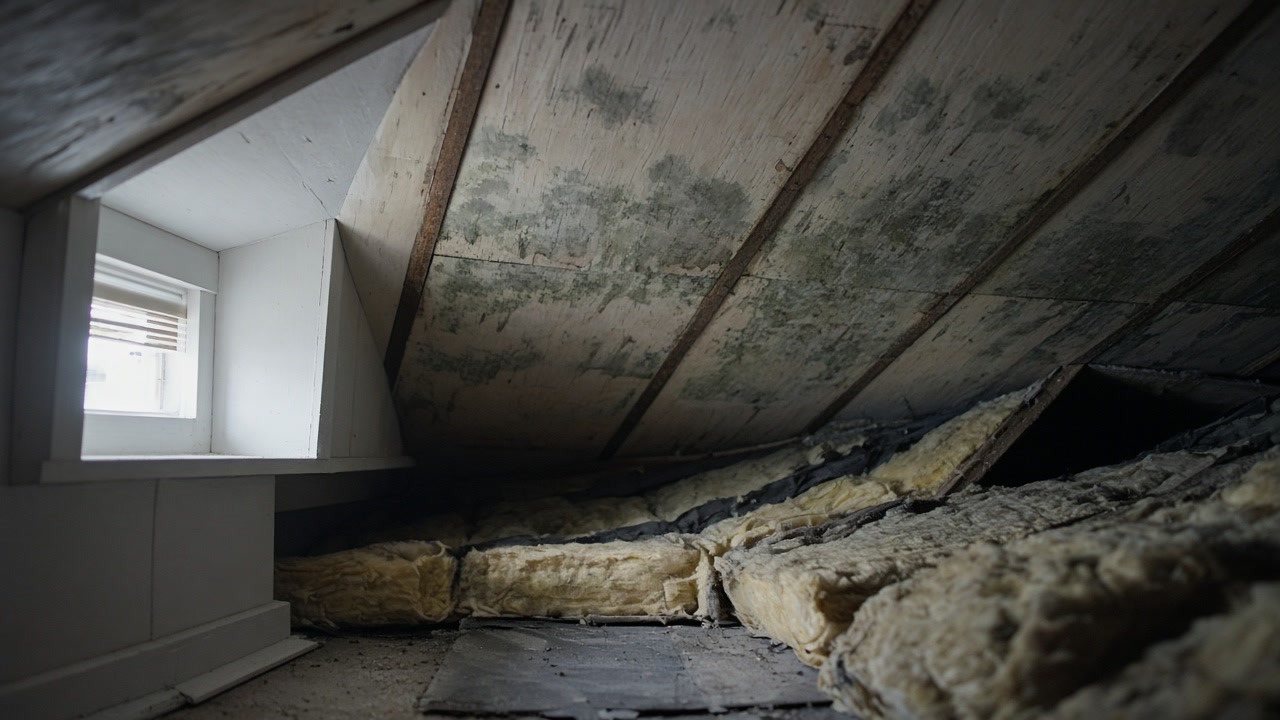
- Attic remediation on roof sheathing and rafters where condensation or a roof leak has fed growth, including tight knee wall spaces in Cape style houses
- Leaving the work area as the plan specifies for the independent post remediation assessment
What sets the size of a mold removal in a Nassau house
The written plan fixes the scope. These are the things that made that plan large or small, and they are worth understanding before the quotes arrive.
How much porous material carries growth
The New York State Department of Health says porous materials with extensive growth, such as drywall, carpeting, paper and ceiling tiles, should be discarded. Growth on painted block can often be cleaned; the same area on drywall comes out.
Whether the floor covering is sitting on damp concrete
The EPA says a covering laid on concrete whose vapor emission exceeds the manufacturer's limit may fail and promote mold growth. When that is the cause, the plan may lift flooring across the slab, not only over the stain.
Whether the water source is repaired yet
The state labor department says the source should always be corrected before cleanup or the growth will likely return. If the plumber, roofer or grading work is not finished, the remediation waits for it.
How finished the lower level is
Carpet over concrete, framing, insulation and drywall are each a separate layer to remove and bag. An unfinished cellar with growth on block is a much smaller job than the same wall with a finished room built against it.
Whether the house is lived in during the work
Labor Law section 945 has the plan set out notices for occupants, and people living in the house change how the work area is sealed off, how long it stays sealed and the order rooms are worked in.
How hard the growth is to reach
A knee wall space in an expansion attic, the underside of a slab floor covering, or a cavity behind a built in all take longer to open, clean and close than an exposed wall.
Holding an assessor's plan already?
Send us what it covers and where the house is. We connect you with licensed remediation firms that price that written scope, not one they wrote themselves.
The order a Nassau mold remediation follows, plan first
Put the plan in front of the firms pricing it
The state labor department explains that the client gives the assessor's plan to the remediation firms being considered, so each one prices the same work. That is why a removal price should not come before the assessment.
Repair the water
The plumber, roofer, heating contractor or grading contractor named in the plan fixes the source. Clearing growth while water is still arriving means paying for the same removal again later.
Seal off the work area
Containment and air pressure are set up the way the plan specifies, with notices to anyone living in the house.
Remove what cannot be saved
Porous material with heavy growth, and any wet material that cannot be cleaned and dried thoroughly, is bagged and taken out. In a slab house that often includes the floor covering and its underlayment.
Clean and dry what stays
Framing, block and concrete are HEPA vacuumed and cleaned. The EPA says concrete and masonry can hold a great deal of water and must be thoroughly dry before being covered again.
Hand the area to the assessor for clearance
The independent assessor, never the remediation firm, checks the area for visible mold and confirms the work followed the plan.
Test the slab before the new floor goes down
The EPA recommends measuring a slab's vapor emission rate before any covering is installed, even decades after the house was built. Skipping it is how the same growth ends up under the replacement floor.
What mold remediation looks like
When removal is not the next job, and what the remediation firm leaves to others
When you may not need this at all
- If there is no written assessment yet, remediation is not the next step. The state labor department says a licensed remediator may not start without one, even if you sign a waiver.
- Under about ten square feet, the EPA says most homeowners can clean it themselves, and an owner working on their own home needs no mold license at any size.
- If the leak is still running, book the plumber or roofer first. Removing growth that the same water will feed again is money spent twice.
- If the growth sits on hard surfaces such as concrete or block and the plan calls for cleaning, you may not need anything torn out at all.
- If you rent, New York Real Property Law section 235-b gives every residential lease a landlord's warranty that the home is fit to live in, so persistent mold and leaks start with the landlord.
What is out of scope
- Writing the scope or doing the clearance. Both belong to the independent assessment firm, and New York bars the remediation firm from either on the same property.
- Plumbing, roofing, grading or drainage repairs, which the plan assigns to those trades
- Repairing or replacing heating tubing in a slab, which is a heating contractor's job
- Rebuilding after clearance: new drywall, flooring, paint and trim
- Dealing with your insurer on your behalf
- Health or medical advice
Licensed mold remediation booked in towns across Nassau County
- Mold Remediation in Port Washington
- Mold Remediation in Manhasset
- Mold Remediation in Great Neck
- Mold Remediation in Glen Cove
- Mold Remediation in Sea Cliff
- Mold Remediation in Roslyn
- Mold Remediation in Syosset
- Mold Remediation in Hicksville
- Mold Remediation in Levittown
- Mold Remediation in Garden City
- Mold Remediation in Mineola
- Mold Remediation in Hempstead
- Mold Remediation in Elmont
- Mold Remediation in Massapequa
Questions Nassau homeowners ask about mold removal
Can a removal company price the job before the assessment?
The state labor department says remediation estimates should not be given before an assessment, because an early price takes away the protection of having an independent assessor define the job. Get the plan first, then collect prices against it.
Why does the plan lift flooring in rooms that look fine?
Because a slab is one piece of concrete under several rooms. The EPA explains that water under tile on a slab may be liquid wicking up from the fill beneath or vapor moving through the concrete, and neither stops at a doorway. If the assessor found moisture under the next covering, it goes on the plan.
Do we have to move out during the work?
It depends on the containment the plan specifies and where the work is. Many jobs in a basement or a single room are sealed off while the rest of the house is used. The plan sets out notices for occupants, and the remediation firm will tell you what that means for your household before work begins.
Someone already pulled out the wet drywall. Does that change anything?
It changes what the assessor sees, so say so up front. The hidden side of the material that stayed, the framing behind it and the water source are still the questions, and they are usually what the remaining work is about.
What does remediation cost?
We do not price the work. The quantities in the plan drive it: how much material comes out, how much is cleaned, how long containment stays up and whether the house is occupied. Because every firm prices the same written plan, you can compare the quotes line by line.
Which license should a removal firm hold?
The state labor department issues five mold licenses. A company carrying out removal needs the Mold Remediation Contractor license, and its supervisors and workers carry abatement licenses of their own. You can check a firm on the department's published register.
Get the plan priced by licensed remediation firms
Tell us the rooms, the materials and whether the leak has been repaired. Asking commits you to nothing.