
Guide
Musty smell in a house with no basement? Look at the slab
You have no basement, yet a corner smells damp, a baseboard is stained or floor tile is lifting. In a Nassau slab house the nearest well may read far below, so the damp can come from the house or up through the floor. Here is where to look and when to call an assessor about a leak.
We book your mold assessment first. A separate company does the removal. We are not the contractor.
Describe the wet spot
Start with a name, a mobile number and your ZIP. Add the room and the surface if you can.
What Mold Removal Nassau County stands behind
- R1Reaching out is free, and you owe us nothing.
- R2We charge nothing for sorting out the job.
- R3Your assessor and your remediator work for different firms.
Your first booked job comes $100 off, paid by us.
- The $100 comes from us, so the contractor's quote is unchanged.
- One per customer at each Nassau County address.
How these houses were built
Levittown grew from 17,447 Levitt houses, put up from 1947 to 1951. Zoning was changed on May 27, 1947 to allow homes with no cellar.
The houses stood on concrete slabs. American Heritage reports copper coils set in the slab for radiant heat. Census figures put the median Levittown house at 1952, and 87.2 percent of homes were built before 1960.
Levittown is the famous case. If your house went up in the 1950s, the same questions apply.
Why a slab gets damp with the water far below
The USGS well in Levittown read about 24 to 26 feet below the surface in spring 2016. That is one well, so ask your assessor about your slab.
EPA explains that water under a slab can be liquid rising out of the fill beneath, or vapor working through the concrete. Modern slabs have a polyethylene sheet beneath them that is meant to block this. A trade author writes that Levitt put no vapor barrier under the slab.
That does not mean your floor is wet from the ground. Ask your assessor whether the missing barrier could matter in your house.
Where to look first
Start at the edges. Check the corner where the slab meets the wall, the base of an exterior door and the bottom of a closet wall. Moisture shows up there first.
- Lift a corner of carpet or an edge of a rug and feel the floor beneath.
- Look at the bottom inch of drywall for stains, bubbling paint or a soft spot.
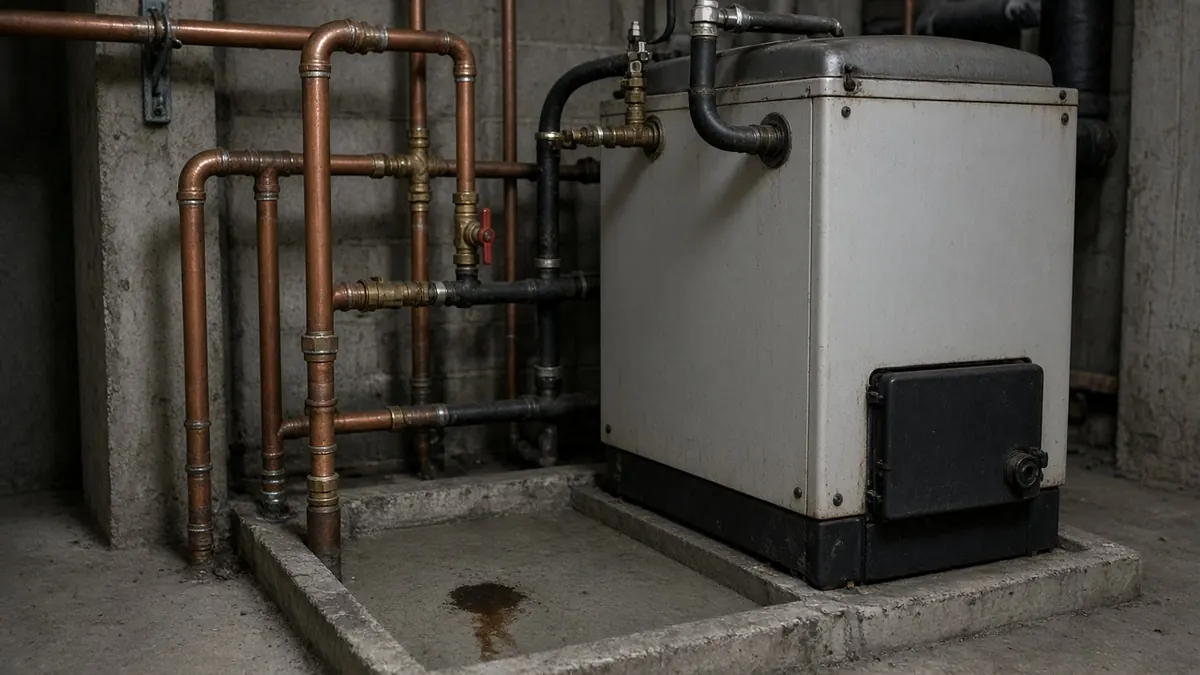
- Check cold water pipes and the water heater area for drips or rust.
- Walk the outside and see where downspouts land and which way the ground slopes.
Write down what you find and the date. An assessor can use it.
The heating pipes in the floor
Many original Levittown houses had copper heating tubing in the slab. The same author who notes the missing barrier says leaks from that tubing soaked into the ground, so small ones could go unnoticed.
A leaking floor line can keep an edge of the slab damp for months. If your house still has the original system, or has had a line cut or patched, tell the assessor. Repairing a heating line is a heating contractor's job, not a remover's.
Do not assume this is your case. Some slab damp is a gutter, a grade or a humid summer. But do not rule it out.
Humidity and sweating surfaces
EPA's target for indoor humidity is under 60 percent, with 30 to 50 best. A basic meter from a hardware store shows you where the house sits.
It also advises acting quickly when moisture collects on windows, walls or pipes, and says rust is a sign that condensation occurs.
When you can handle it yourself
EPA says a homeowner can often clean growth smaller than about 10 square feet. Fix the cause first, then clean, or the patch returns.
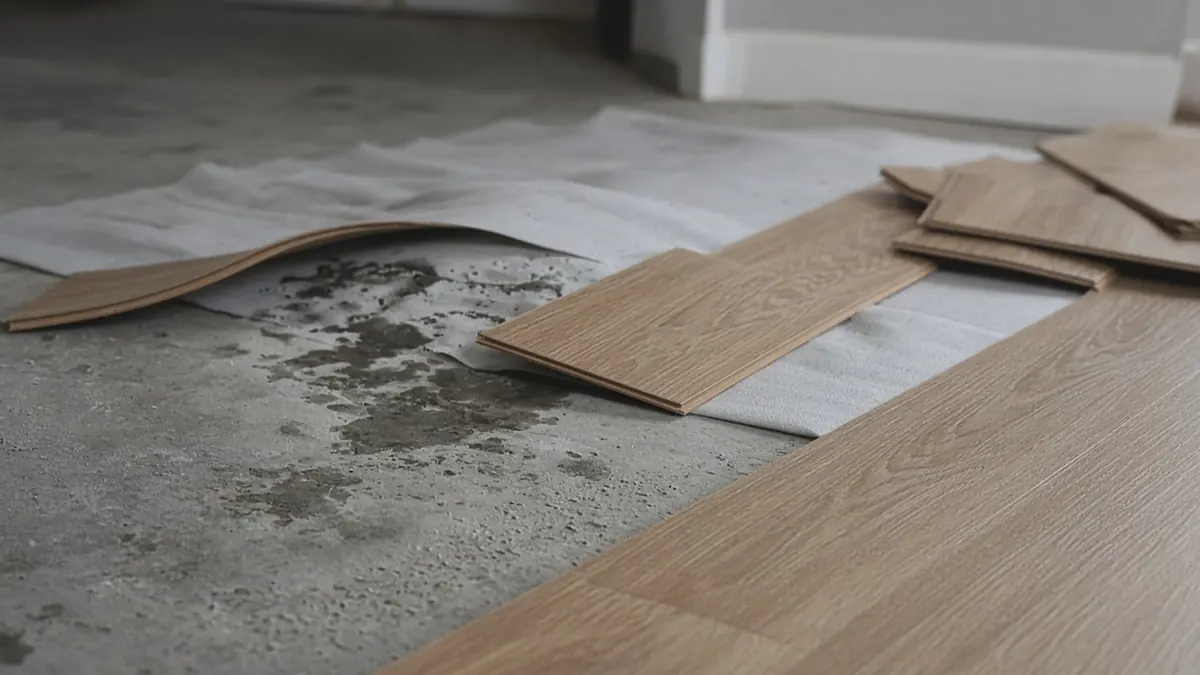
If the patch is bigger, if a smell has no visible source or if flooring is involved, book an assessment. A removal firm without a written plan is quoting blind, and New York does not let it write that plan itself.
What not to do first
Do not paint over a stain, lay a new floor over it or pour a sealer on the slab. Each one hides the problem and can trap moisture below.
Do not tear out a whole room on a hunch either. If material is truly wet and moldy, the plan will say what comes out. Until then, keep the area dry and photograph it.
Questions to ask your assessor in a slab house
Ask whether the damp pattern points to a line in the floor, to vapor or to the house outside. Ask whether the plan lifts flooring only at the damp edge or across the floor. Ask which trade repairs the source, and whether the plan lists that trade. Write the answers next to the plan so the removal firms read the same scope.
Boilers, oil tanks and the slab
Census estimates show 73.0 percent of Levittown homes heat with fuel oil or kerosene, nearly three times the county share. In a slab house, the boiler and its lines often sit close to the floor you are worried about.
Tell your assessor where the boiler, the water heater and any lines run. A drip near that corner can look like slab damp, and the plan should name the right repair trade before anyone lifts a floor.
What the assessor adds for a slab house
The assessor reads the floor, the lines and the roof, and tells you which one fed the damp. The written plan lists which rooms need flooring lifted and which can stay.
You then send that plan to two or three firms. You hold the same document, so you compare like with like.
Describe your floor and the damp spot in the form. We line up the assessor first, then a separate remover once you have the plan.
Related jobs
What Mold Removal Nassau County stands behind
- R1Reaching out is free, and you owe us nothing.
- R2We charge nothing for sorting out the job.
- R3Your assessor and your remediator work for different firms.
- R4The $100 credit applies just as the Terms set out.
The work itself falls under your own contract with the contractor.
Mold Removal Nassau County, (315) 640-3590 Read the full terms
Your first booked job comes $100 off, paid by us.
- The $100 comes from us, so the contractor's quote is unchanged.
- One per customer at each Nassau County address.
- Book the job by December 31, 2026 to use it.
- The contractor quotes and bills the work.
Describe your slab floor and the damp spot, and get the right first step.