
Guide
Wet cellar or damp slab: how far down is the water in Nassau County?
Your lower level is wet and someone has told you Long Island has a high water table. In Nassau County that is only sometimes true. USGS wells 1.3 miles apart read under a foot and over 160 feet. Tell us your town, find your band and ask before spending on a sump pump or a sealer.
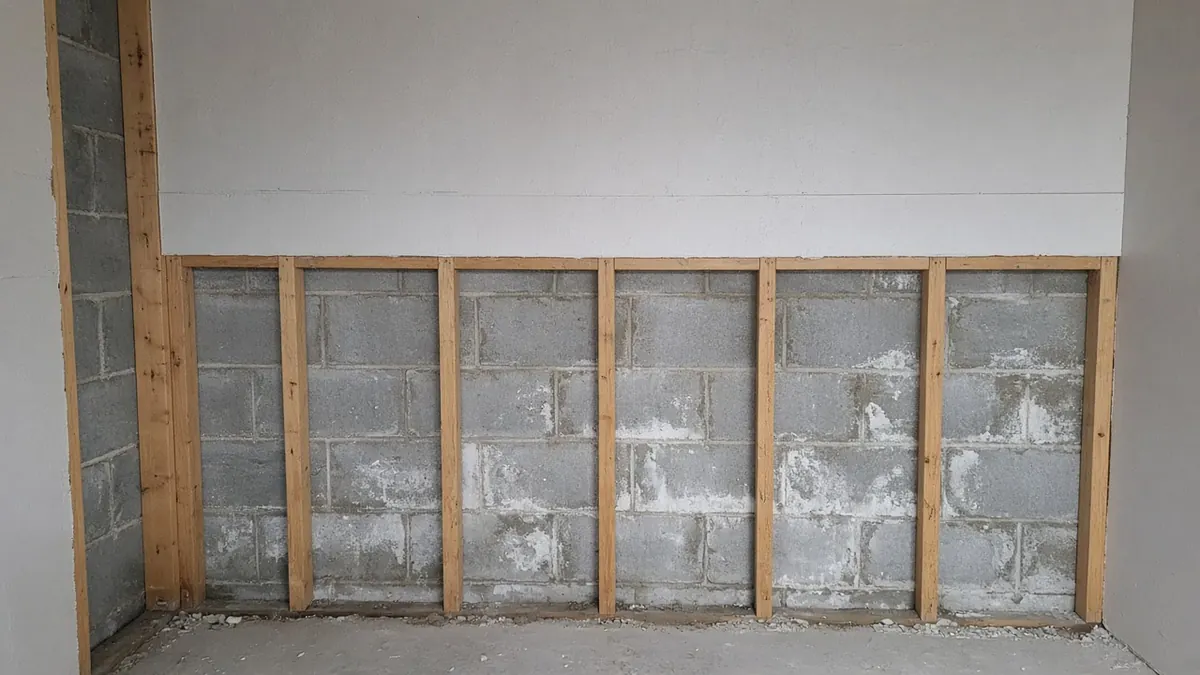
We book your mold assessment first. A separate company does the removal. We are not the contractor.
Describe the wet spot
Start with a name, a mobile number and your ZIP. Add the room and the surface if you can.
What Mold Removal Nassau County stands behind
- R1Reaching out is free, and you owe us nothing.
- R2We charge nothing for sorting out the job.
- R3Your assessor and your remediator work for different firms.
Your first booked job comes $100 off, paid by us.
- The $100 comes from us, so the contractor's quote is unchanged.
- One per customer at each Nassau County address.
What the federal map says, and what it does not
USGS mapped the depth to the water table across Long Island for April and May 2016. It marked the shallow areas in red and said that substructure flooding is more likely there.
The same agency states that the map is accurate only at a regional scale, with a stated error of 5 feet up or down. It follows the shape of the land. It does not describe your lot.
So use the map to learn which band your town sits in. Then ask an assessor to read your house. Do not use it to settle an argument with a contractor about your own cellar.
Three bands, three kinds of reading
The water table is a mound that follows the higher ground and the glacial ridge down the middle of the island. Near the sea it falls to sea level. On the ridge it sits far below the surface.
- On the North Shore, Port Washington wells read 0.37, 11.38 and 16.11 feet down. Roslyn read 10.26 feet and Glen Cove read 104.57 feet.
- Across the middle, Garden City read about 25 feet and Levittown about 24 to 26 feet. Hicksville read 47.35 feet.
- Farther up the middle, a Syosset well read 164.83 to 164.88 feet.
Pick the line closest to your town and keep it in mind as you read the rest.
How two wells 1.3 miles apart differ by 165 feet
On Manhasset Neck, one USGS well in Port Washington read 0.37 feet below the surface on May 23, 2016. A well in Flower Hill, roughly 1.3 miles away, read 165.27 feet on April 19.
Low ground beside the harbor sits right on the water. A hilltop a mile inland sits far above it. The depth changes with the land, and the land changes fast on a neck of hills and coves.
If you live on a slope, your own lot may sit between those two numbers. Ask your assessor to treat the number as a starting point, not a verdict.
Where the water table is deep, look at the house
When the water sits tens of feet beneath your floor, it is unlikely to explain a cellar wall that stays wet after a dry week. Something nearer may be feeding it.
Common suspects are a supply or heating line, a downspout that empties at the wall, ground that slopes toward the house and cold concrete that sweats in summer. EPA names several of these in its moisture guidance.
Walk the outside first. Check where each downspout lands, then check whether the ground slopes away. Then look inside for rust, stains along a pipe and water that appears on cold surfaces.
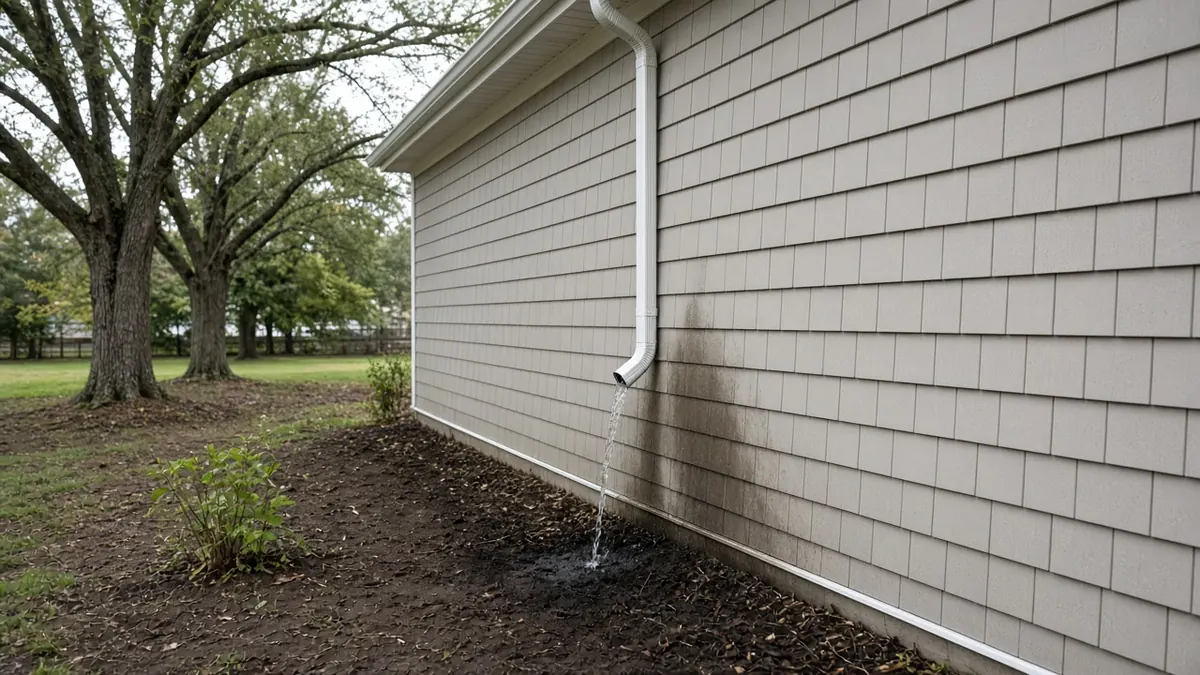
Shallow water makes the ground a suspect
Near harbor edges and bays, the ground can be the source. Where USGS had no readings along the South Shore marshes and barrier island, its map assumed the water stood at sea level.
If your cellar fills after a long rain with no leak anywhere, tell the assessor. A pattern that follows the tide or the season may point to the ground, and the fix is different from a plumbing repair.
Waterproofing and drainage design are separate trades. Your assessor names the source, and you then ask those trades to price the repair.
What sewering did to one area's water table
A USGS study of a 32 square mile sewered area of Nassau County found that groundwater there fell 11.8 feet against an unsewered area to the east from 1953 to 1972, mostly from sewering.
That is one study of one area in those years. It does not tell you what the water is doing under your street today, so ask for a reading at your own address.
Why the middle of the county sits so deep
For its 2016 survey, USGS collected 76 water table measurements in Nassau County. In parts of central Nassau, it reports, the whole upper layer of sand and gravel is dry, so the water table sits lower, in the Magothy aquifer beneath.
That is one reason a slab in Hicksville or a cellar in Syosset may involve groundwater less. Ask the assessor, and look at the roof, the pipes and the grade early.
Questions to ask before you pay for a pump or a sealer
- Which reading or finding says the water is coming from the ground at my address?
- Does the wet spot change with rain, with the tide or with the season?
- What else did you check: pipes, gutters, grade and cold surfaces?
- Will you put the cause and the repair in writing?
A contractor who cannot answer the first question may be selling a fix for water that is not there. Ask the same questions of every quote, then compare the answers. A written assessment gives you the baseline.
What to do with your number
Write down your town, which band it sits in and the closest USGS reading. Add what you see: where the damp shows, whether rain makes it worse and whether a pipe runs nearby.
Send those notes to us and an assessor can start with the right question. If the water is shallow where you live, the assessor looks at the ground and the house. If it is deep, the visit goes to pipes, gutters and condensation.
Either way, get the finding on paper before anyone quotes a fix. Then send that paper to two or three contractors and compare.
Related jobs
What Mold Removal Nassau County stands behind
- R1Reaching out is free, and you owe us nothing.
- R2We charge nothing for sorting out the job.
- R3Your assessor and your remediator work for different firms.
- R4The $100 credit applies just as the Terms set out.
The work itself falls under your own contract with the contractor.
Mold Removal Nassau County, (315) 640-3590 Read the full terms
Your first booked job comes $100 off, paid by us.
- The $100 comes from us, so the contractor's quote is unchanged.
- One per customer at each Nassau County address.
- Book the job by December 31, 2026 to use it.
- The contractor quotes and bills the work.
Send your town and the wet spot, and learn which band you are in.